-
Courses

Courses
Choosing a course is one of the most important decisions you'll ever make! View our courses and see what our students and lecturers have to say about the courses you are interested in at the links below.
-
University Life

University Life
Each year more than 4,000 choose University of Galway as their University of choice. Find out what life at University of Galway is all about here.
-
About University of Galway
About University of Galway
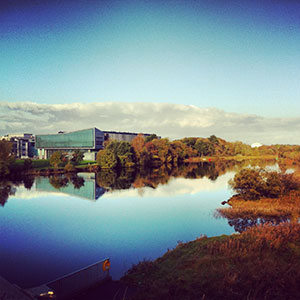
Since 1845, University of Galway has been sharing the highest quality teaching and research with Ireland and the world. Find out what makes our University so special – from our distinguished history to the latest news and campus developments.
-
Colleges & Schools
Colleges & Schools
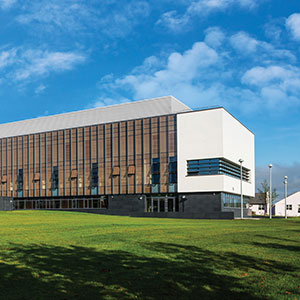
University of Galway has earned international recognition as a research-led university with a commitment to top quality teaching across a range of key areas of expertise.
-
Research & Innovation
Research & Innovation
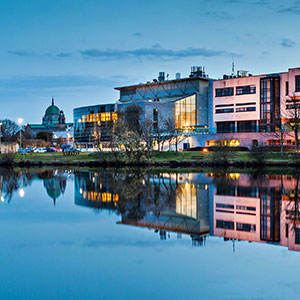
University of Galway’s vibrant research community take on some of the most pressing challenges of our times.
-
Business & Industry
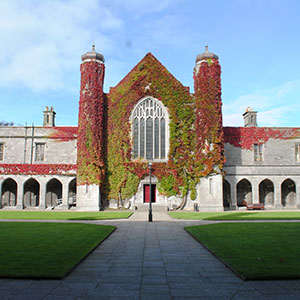
Guiding Breakthrough Research at University of Galway
We explore and facilitate commercial opportunities for the research community at University of Galway, as well as facilitating industry partnership.
-
Alumni & Friends

Alumni & Friends
There are 128,000 University of Galway alumni worldwide. Stay connected to your alumni community! Join our social networks and update your details online.
-
Community Engagement
Community Engagement
At University of Galway, we believe that the best learning takes place when you apply what you learn in a real world context. That's why many of our courses include work placements or community projects.








 Accessibility & Language
Research
Research areas in economics at University of Galway
Economics has identified the following areas as its priority research areas:
- Health Economics
- Natural Resource Economics and Policy
- International Finance and Macroeconomics
- Economic History, Theory and Methodology
- Ageing & Public Policy
See below for more details and links related to these research areas.
1. Health Economics
Health economics research has a long-established history of activity, output and impact at the Discipline of Economics, University of Galway. Currently, a wide array of health economics research is conducted by colleagues in the discipline whose research interests cover multiple areas including health outcomes, health behaviours, health inequalities, healthcare, health technology and MedTech, health and ageing, health and the environment, health and the marine, and health innovation. The Discipline’s health economics research projects involve the application of a variety of quantitative, qualitative and experimental research methodologies, with particular focus on health econometrics and causal inference, health preference elicitation, health economic evaluation and health technology assessment, and evidence synthesis. This research agenda spans multiple research centres and involves interdisciplinary collaboration within and beyond the Discipline, College and University on a variety of externally funded research projects. For more information on health economics research at the University of Galway, please visit the following links:
Find out more:
2. Natural Resource Economics and Policy
Economists in the Natural Resource Economics and Policy (NREP) area have a strong record of published research in high-impact journals and have secured more than €4 million in research funding over the past seven years, including a Beaufort award, three Environmental Protection Agency projects, three EU funded projects, a Norwegian Research Council funded project, as well as numerous Teagasc Walsh Fellowships. The NREP group includes a large number of externally funded PhD students. The Group teach modules in the NREP area at both undergraduate and postgraduate level and the NREP masters programme features work-based learning experience.
The Socio-Economic Marine Research Unit (SEMRU), a rapidly expanding research cluster focused on marine economics, is the national leader in the field, with a growing international reputation for high-quality research, as evidenced by recent success in EU funding projects. The proximity of Teagasc and the Marine Institute to NUI Galway means that strong relationships have developed between these institutes and the NREP group. The Group have also developed links with researchers and State agencies in China, with the Center of the Blue Economy in California, and with research partners in Norway. Policymakers at home and abroad, including Government Ministers, regularly turn to NREP economists for policy advice in the area of natural resource economics.
Find out more:
3. International Finance and Macroeconomics
Economists in the areas of macroeconomics and international finance play prominent roles in informing policymakers and the public discourse both nationally and internationally. Professor Alan Ahearne is Chairman of the joint Economic and Social Research Institute/Department of Finance research programme on the Macro-economy and Taxation, an advisor to the International Monetary Fund, and a director of the Central Bank of Ireland. Professor John McHale is Chairman of the Irish Fiscal Advisory Council, a member of the National Economic and Social Council, and has recently been appointed as the new Director of the Whitaker Institute. Dr Srinivas Raghavendra is leading a £1.5 million international research project on estimating the macroeconomic and social impacts of violence against women and girls, funded by the UK Department for International Development.
The Group offer modules in macroeconomics and international finance at both undergraduate and postgraduate (master's and PhD) level. The master's programme in international finance and the B.Sc. in Financial Mathematics and Economics are nationally recognised for producing graduates of the highest quality, as evidenced by several prestigious individuals and team awards that students have recently won and by their success in securing employment in the world’s top financial firms and places on PhD programmes in top-ranked universities (e.g., Cambridge, LSE and UC Berkeley). The Group has developed strong relationships with a range of firms (e.g., Davy, Pioneer, and Mercer) and industry bodies (e.g., CFA Ireland) in the financial services sector.
4. Economic History, Theory and Methodology
The Discipline of Economics has a very active research group in the areas of Economic History, Theory and Methodology whose work has been published in leading international journals (e.g., Journal of Economic Theory) as well as in monographs and books. In particular, this Group has internationally recognized experts in the fields of non-linear dynamical systems, philosophy and methodology of economics, social choice theory, and political economy. Their work complements the work of their colleagues in the other priority research areas.
The Group has a considerable number of PhD students working on research topics in political economy, social choice theory, and methodology of economics whose research has been funded by the Irish Research Council for the Humanities and Social Sciences. May 2015 saw the launch of Duanaire: a treasury of digital data for Irish economic history led by Dr Aidan Kane. Duanaire is gathering, curating, and making available through online visualisations a unique corpus of Irish economic history data, including a very important and detailed annual dataset on Ireland’s 18th-century trade at port level
.png)